by Sam Tackeff | Jan 8, 2012 | Blogging, Books, Writing

Last month I got to visit the gorgeous offices of Harvard Common Press not once, but twice, and let me tell you – I’m about ready to move in there.
The second trip was with Boston Brunchers, founded by the multi-talented Renee Hirschberg. Renee works full time, is getting her masters, blogs several times a week, and runs a real life community whisking lucky bloggers to brunch several times a month in the Boston area.
This time she managed to swing a doozy – brunch for 40 at Harvard Common Press, complete with a question and answer session about publishing a cookbook with HCP’s associate publisher and digital media director Adam Salomone, owner Bruce Shaw, and marketing director Nancy Grant Mahoney (who’s name was too long for her Twitter handle, and got cut off – perhaps fortuitously? – to “Mahon”, a delightful cheese).
Writing a cookbook can be a two year process (or more). Here were some of the details in a snapshot:
Finding your Publisher:
- Use Social Media to make friends with publishers: HCP has published authors they have gotten to know through Twitter!
- In thinking about your blog and brand, remember what you are passionate about.
- Engagement level: HCP will address many different aspects when evaluating a potential author. For bloggers, this includes writing, photography, voice, knowledge and interest, compete.com traffic, blog comments, twitter and facebook usage.
Process: so you’ve made it! You’ve waded through and have a publisher. What can you expect next?
- Material Sources: It used to be that you could use 25% of previous blog recipes, now most publishers expect your cookbook to be 100% new material. (More work for you!)
- Editorial Process: At HCP, editorial director Dan Rosenberg helps authors come up with a work plan, the developmental stage that helps you assess what needs to be in your cookbook.
- Writing the manuscript: This can take 9-12 months, and realistically if you are a blogger, this means a lot less time eating out, cooking for the blog, and blogging in general.
- Editors: You’ll likely have a robust back and forth with your editors. You’ll bang your head, panic, go a little crazy. This is good.
Ultimately, you, the editor and the publishers have the same goal in mind – to make your cookbook the best book it can be.
Once published (or almost published): Publishing houses used to have in-house marketing and do everything to pub and market a book. Now, authors can work closely with the publisher to promote the book. Bloggers have a built in market, and HCP works with the author with a wide variety of social media tools including tweet tours, blog tours (where the author may guest post on 10 or more different blogs), and in person tours.
(If you write a book, you can give a talk at Omnivore! Just make sure you ask Celia to provide some wine!)
* * *
One more note, from me. If you want to write a cookbook, but aren’t ready to take the plunge, consider working for a published cookbook author on their next book. You will wash a lot of dishes, learn an enormous amount about the process, and be well–prepared when you eventually decide to write your own.
* * *
Bruce Shaw, owner of Harvard Common Press, on Bloggers: “You are technically our competitors, but you are also our life blood here!”
* * *
And some photos of the office:
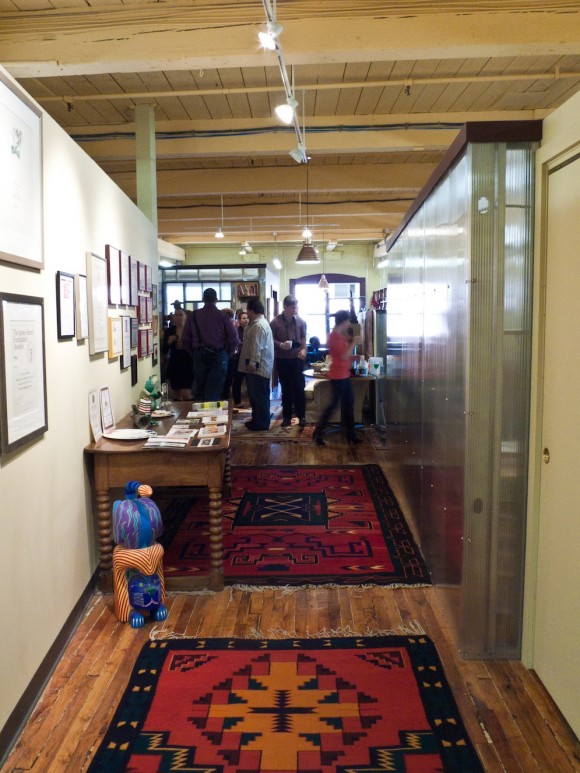

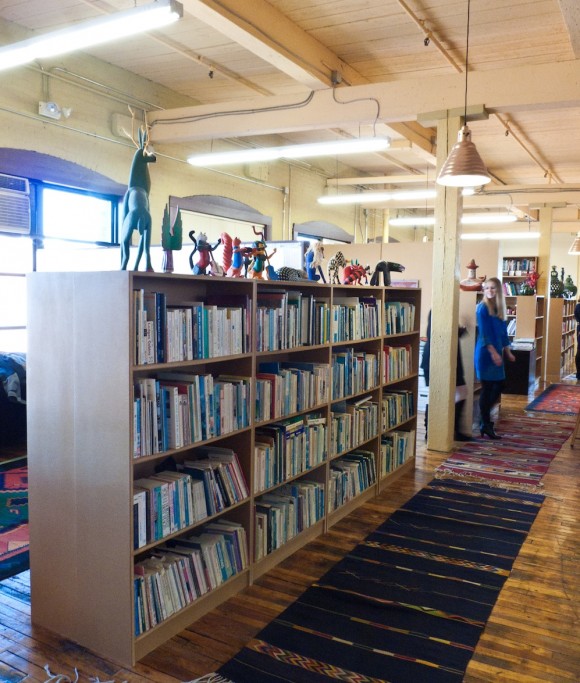

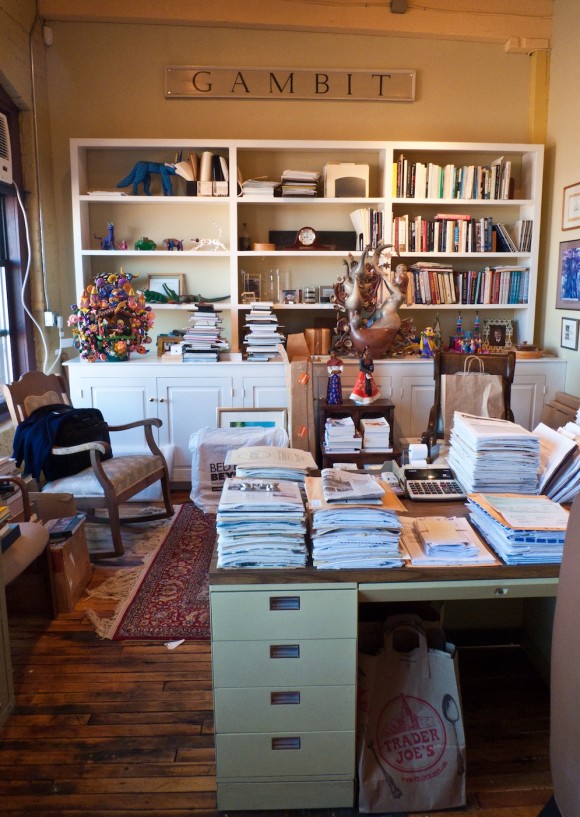

A big thank you to the kind folks at Harvard Common Press for letting me snoop around!
Harvard Common Press
HCP Dishes Blog:
HCP Blog Eats (new in the blog world): http://www.blogeats.com/
by Sam Tackeff | Jan 3, 2012 | Books, Soups

For quite some time, the prevailing mental association I had of Sweden was Jamie Lee Curtis in ‘Trading Places’ running around a train claiming to be “Inga from Sweden” – despite the fact that she was wearing Austrian lederhosen. I still find myself laughing hysterically at this film when it comes on TBS. If you haven’t seen it, please do.
As for my current Swedish associations, Inga has been replaced with IKEA, the chef Marcus Samuelson, Trina Hahnemann’s lovely Scandinavian Cookbook, and Stieg Larsson’s Millenium trilogy. (The Girl with the Dragon Tattoo books).
This weekend we went to see David Fincher’s version of “The Girl with the Dragon Tattoo”, which didn’t hold up for me as much as the Swedish films, which I adored.
What the movie did succeed in, was renewing my lust for the Swedish countryside. I became hungry for Swedish food. I wanted comfort food that reminded me of the simple, bare landscape. Also, I wanted comfort food that would help me to have the physique of Rooney Mara in her nude scenes of the film. Yes, I know that’s not going to happen. But loading myself up with healthy veg is a start.
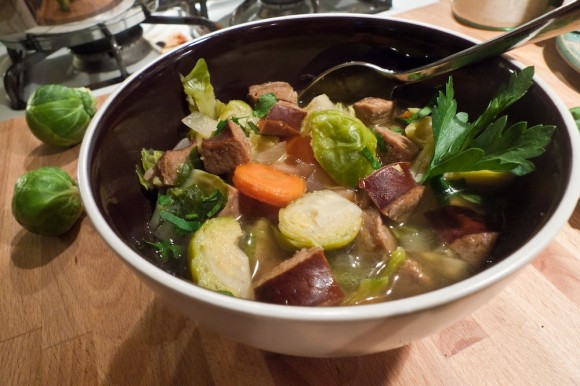
So I picked up my copy of Clifford A. Wright’s “Real Stew: 300 Recipes for Authentic Home-Cooked Cassoulet, Gumbo, Chili, Curry, Minestrone, Bouillabaisse, Stroganoff, Goulash, Chowder and Much More” (what a mouthful! a tasty mouthful) which I got on a field trip to Harvard Common Press, and flipped to this Swedish Sausage and Brussels Sprout number. She’s not the most beautiful, but is chock full of tasty ingredients!
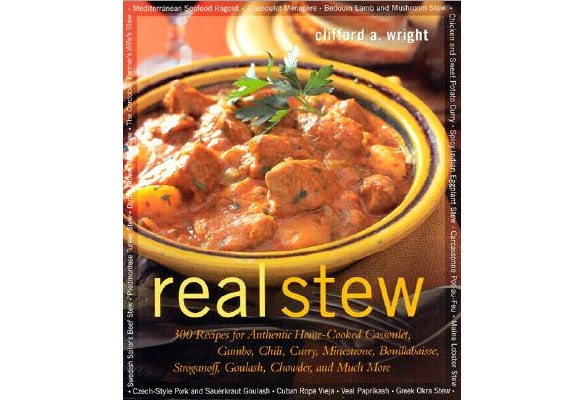
I’ve been cooking out of “Real Stew” for the past few weeks (beginning with a stellar recipe for “Classic Egyptian Lamb and Green Bean Stew). With New England weather the way it is, this cookbook came at the perfect time, right when I needed warming recipes for the quickly cooling weather.
I’m a big fan of any sort of soup, stew, or braising book, particularly when it is cold out and my strongest desire is keep warm and stir things for a couple of hours.
Real Stew isn’t full of glossy photos, but since stews aren’t usually the most photogenic, I wasn’t at all bothered. Wright does a marvelous job in the headnotes whetting your appetite for each recipe. The book is just as much a food history primer as it is a cookbook, and I learned a lot curled up in bed with it. (Although, this is unsurprising as Wright won a James Beard for food writing for his book A Mediterranean Feast. He is very good at the craft of cookbook writing.)
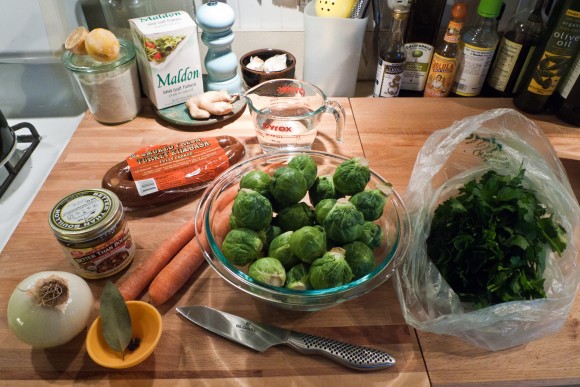
This is a very simple recipe that can be put together in under twenty minutes from start to finish.
I made this recipe almost to the letter, which wasn’t hard, as there were nine ingredients including salt and pepper. I used smoked Turkey kielbasa from Trader Joes, which made it tasty enough, but if you can get the Swedish sausage that Wright mentions, I’m pretty sure it would make this recipe spectacular. Rather than a bouillon cube, I used “Better than Bouillon”, which, unless you have home made beef stock on hand (and praise you if you do), is pretty much the bees knees.
Now, my one word of warning is: this soup tastes like Brussels Sprouts, which, may in fact be obvious, because it is one of the two main ingredients in the title, but you won’t convert Brussels Sprouts haters with this recipe. Which is fine, because that makes more for you.
Swedish Sausage and Brussels Sprout Stew
recipe by Clifford A. Wright, “Real Stew” p. 164
reprinted with permission from Harvard Common Press
makes 4-6 servings
“This stew is one suggested to me by my Saab mechanic Haken Wiberg, who tells me that this stew, called korv-och kal-gryta, uses a kind of sausage called falukorv (or falnkorv), which comes from the town of Falun, northwest of Stockholm. It is a thick, bologna-like sausage popular throughout Sweden and made of beef, lean pork, and pork fatback. Sometimes dried milk is added to it. It is then smoked before finding its way into stews. The Swedes are nuts about falukorv, as you will see by visiting www.falukorv.net on the Internet. In this recipe it is cut into chunks to cook, after peeling the skin off. A good substitute would be a small, one-pound mortadella sausage, such as that made by Arzuman (ask your store manager). Arzuman uses dried milk. If you prefer beef, try Hebrew National beef bologna. A Swedish housewife would typically use a beef bouillon cube, but if you do, make sure you don’t use more salt than called for because the cubes are high in sodium.”
1 pound small mortadella sausage or large cooked or smoked Polish kielbasa, skinned and cut into large dice
1 large onion, chopped
2 large carrots, cut into 1/4-inch-thick rounds
1 1/2 pounds small Brussels sprouts, sliced lengthwise into thirds
1 bay leaf
2 teaspoons salt
6 black peppercorns
2 cups Beef Broth
1 cup water
Finely chopped fresh parsley leaves for garnish
1. Put all the ingredients, except the parsley, in a stew pot, and bring to a boil. Reduce the heat to medium, cover, and cook until everything is tender, about 12 minutes.
2. Sprinkle with parsley and serve.