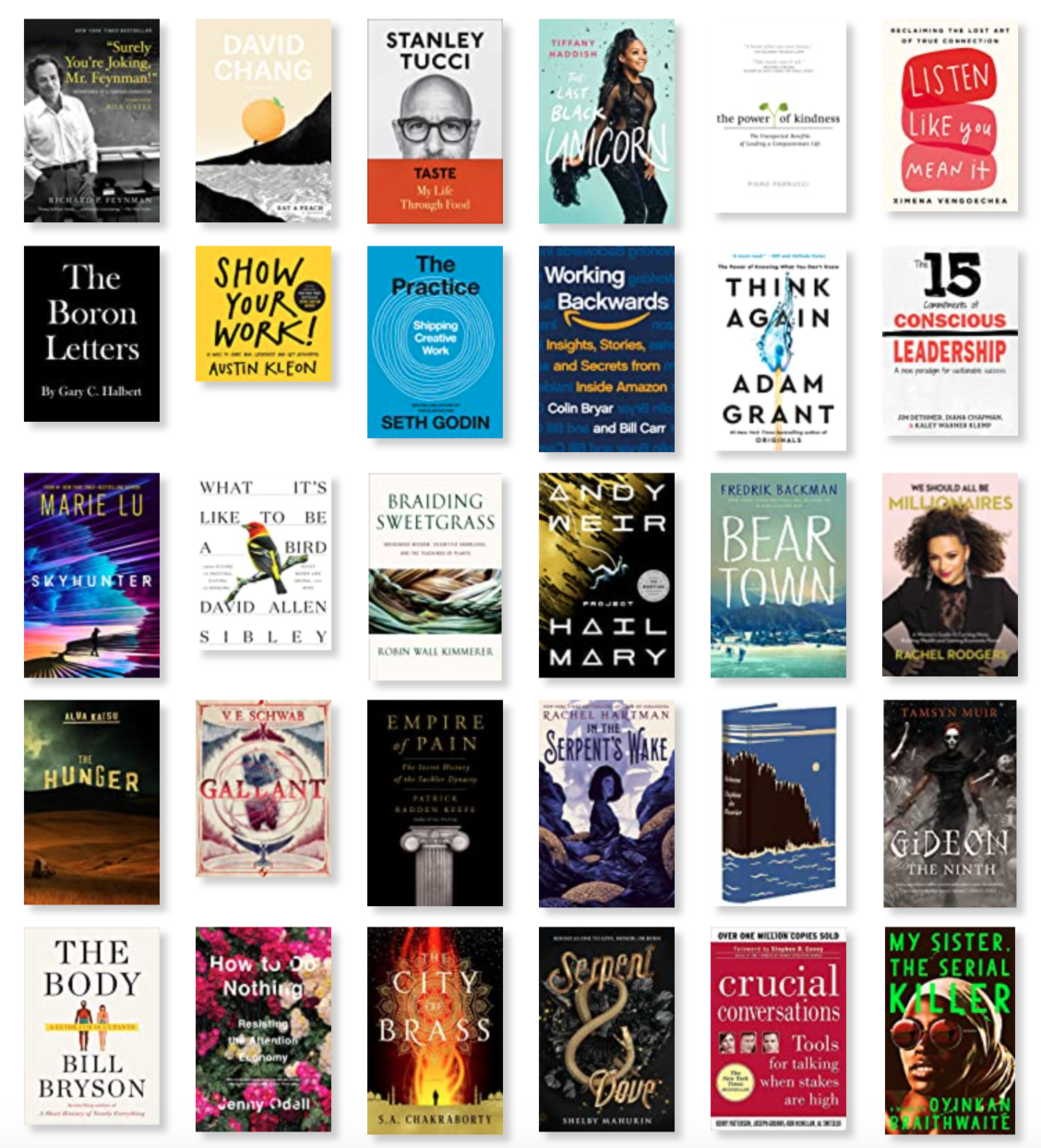
Let’s get reading! Sitting down this weekend to update my current reading list, see where I’m at for the year so far, and make adjustments for fall reading season!
I started with a shortlist of questions to check in:
How’s it going?
How has my reading been so far in 2023? According to my GoodReads, I’ve read 34/52 books (just two behind schedule) although I have quite a few half read books.
Are my categories the right ones? I still love reading YA, Scandinavian Noir, captivating non-fiction (true crime or thrilling history), fitness and health, mindfulness, brains and science, social and emotional learning, nature, creativity, and food writing.
Are the length of books the right ones? The worst is when I find myself stalled by a long book where I’ve lost my attention span. I’ve been trying to have a healthy dose of fast reads to move the ship along.
Have I gotten stuck anywhere? Usually I’m only stuck when I start reading too many books at once.
What can I improve?
How do I make sure I’m learning in the areas that I want to be known for: Longetivity, Good Things, Social and Emotional Learning? Who are the top five authors in the fields that I work in?
Are there noticeable gaps in my reading? I always find that I’m more inspired by memoirs and biographies, but don’t read them enough!
Do I have dedicated reading time? My evergreen quest: read more, scroll less.
It’s here! I’ve been doing a quarterly reading list for the past several years that has somehow turned more into a book list for the whole year. (I have a lot of holdovers from last year that I’m keeping on here.) You can take a look through previous years here: (2022) (2021) (2020) (2017) (summer 2010) (Summer 2014) (Fall Cookbooks 2011)
Why have a reading list? This helps me make decisions about getting in quality reading without falling into decision making slumps. I aim to have a large percentage of my reading written by women, POC, and international writers; and typically read a handful of Man Booker short list titles. I typically make a list of my favorite categories, and then will supplement or swap as I find reading that calls out to me.
What if you just want to read something new and exciting? I make room for the synchronicity of just picking up any random title, but I always have a backup!
The Marvel Effect: it’s easier to pick up a new book in a series than start something completely new. One thing that I’ve learned after a lifetime of reading: it really helps me to have series that I can blow through – long books that don’t require me to continuously learn about a new world and a new set of characters, as well as a smattering of very easy read books (usually middle grade fantasy, or RomCom) – things I can read reliably for a half hour or hour before bed even after an exhaustive day.
A few notes and observations:
Audio Books: yes, I definitely count audiobooks as reading. I process information better when on my walks and runs, and thus prefer listening to memoirs or non-fiction this way. It’s also easier for me to stay engrossed and follow along while I’m moving physically.
Don’t forget FOOD! For the past several years, I read almost zero food memoirs, literature, or history – some of my favorite topics. So I made this one of my kitchen resolutions this year! (Again.) I’m also re-reading cookbooks.
The library is your friend. While I always try to support local book stores – I’m also a huge fan of my local library – grabbing things off the Speed Read Shelf is my jam. Plus you can leave with a large stack and it always feels like I’ve won something. (You can also get Kindle books from the library through Libby. Having a list allows me to put more things on hold, because sometimes there’s a longer wait.)
As always, still working my way through my list of Personal Leadership Development Books, and the BBC Big Read. I also read quite a few business books for work – whatever I need to expand my ideas and sharpen my skills.
I’m always interested in reading things that stoke great minds. I read for entertainment, to rest, to inspire, learn, and to stoke my curiosity. Whenever I listen to a podcast episode, I’m always curious about what kinds of things the guest is reading (particularly when the book is completely outside of their topic, or very niche in their topic.)
New: I’m trying to engage with my reading more by reading criticism, and more importantly, writing.
Categories to choose from: (I often choose outside these, but I find that when I’m in the mood for a particular feeling, it breaks down by this type of category.)
Book Categories I Enjoy:
Fantasy (Adult, YA Fantasy, Middle Grade)
Scandinavian Crime (or Noir crime in general)
Fiction (catch all)
Memoir (particularly: comedy, leadership, business or political)
Non-Fiction (Psychology, philosophy)
Nature (and generally Science Writing)
Creativity
Work (Product Management, People Management, Sales)
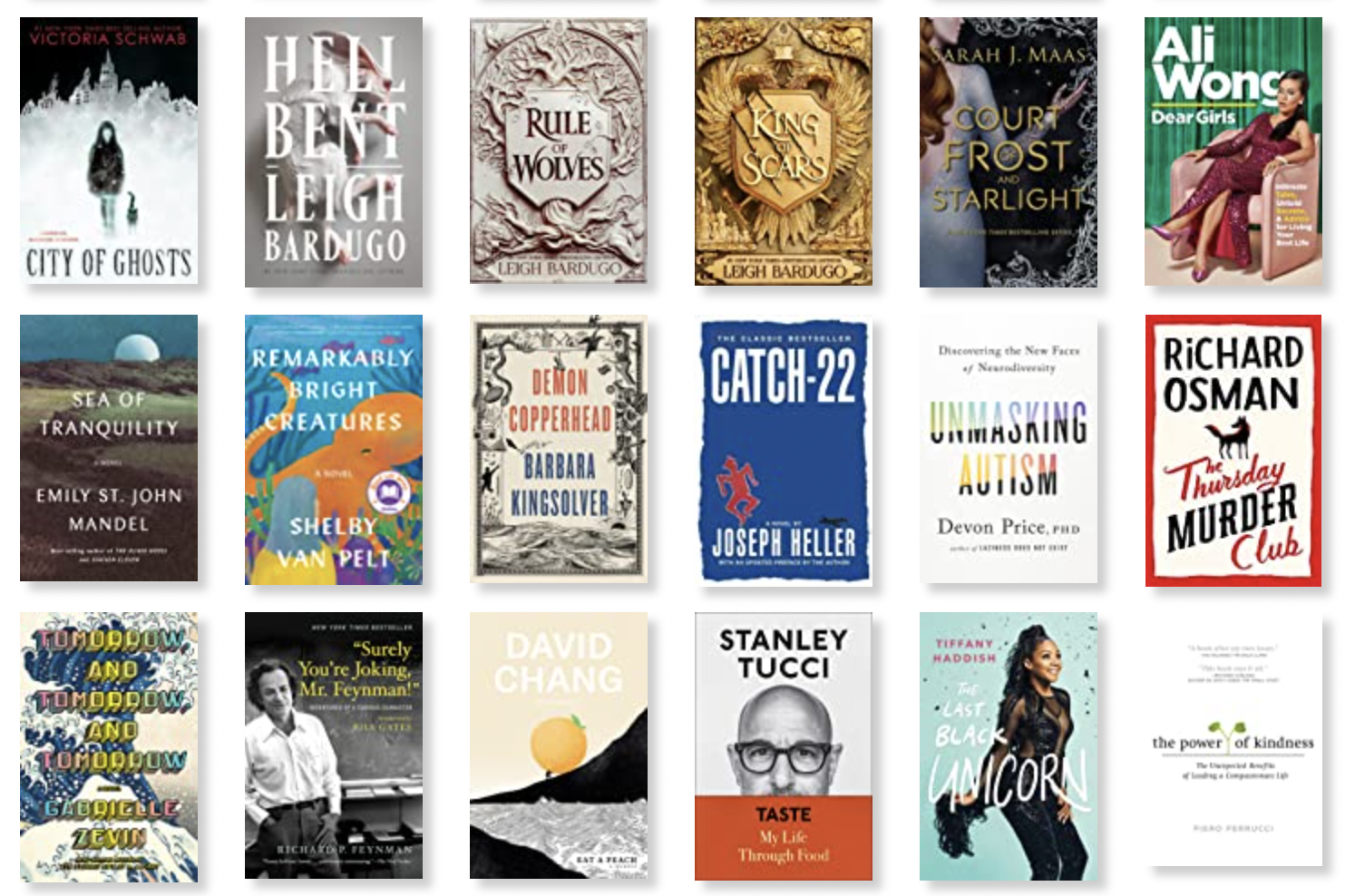
Catch-22 by Joseph Heller (BBC Big Read; I think I’ve read before) 453 pages
Sea of Tranquility by Emily St. John Mandel (2002, 255 pages)
In the Lives of Puppets by TJ Klune
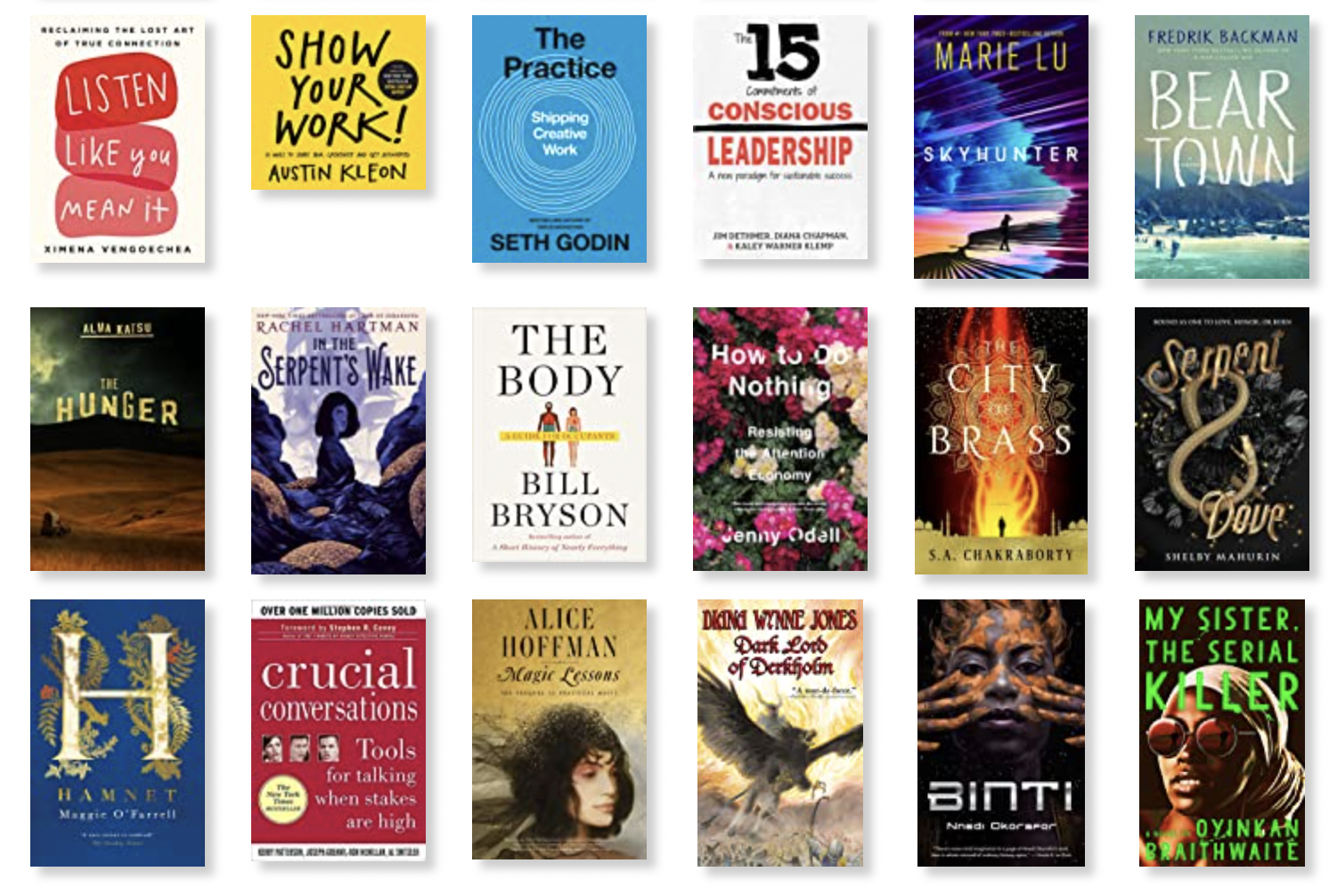
Magic Lessons by Alice Hoffman (and Practical Magic) (2020, 396 pages)
✅ Fairy Tale by Stephen King
✅ Thursday Murder Club #1 (Series) by Richard Osman (2020, 382 pages)
✅ The Dutch House by Ann Patchett
Look for new:
Susannah Clarke
Erin Morgenstern
Stephen King
TJ Klune
Crime / Thriller / Gripping and/or generally Scandinavian
Hidden in Shadows by Viveca Sten (Are Murders #2) – Dec. 5th
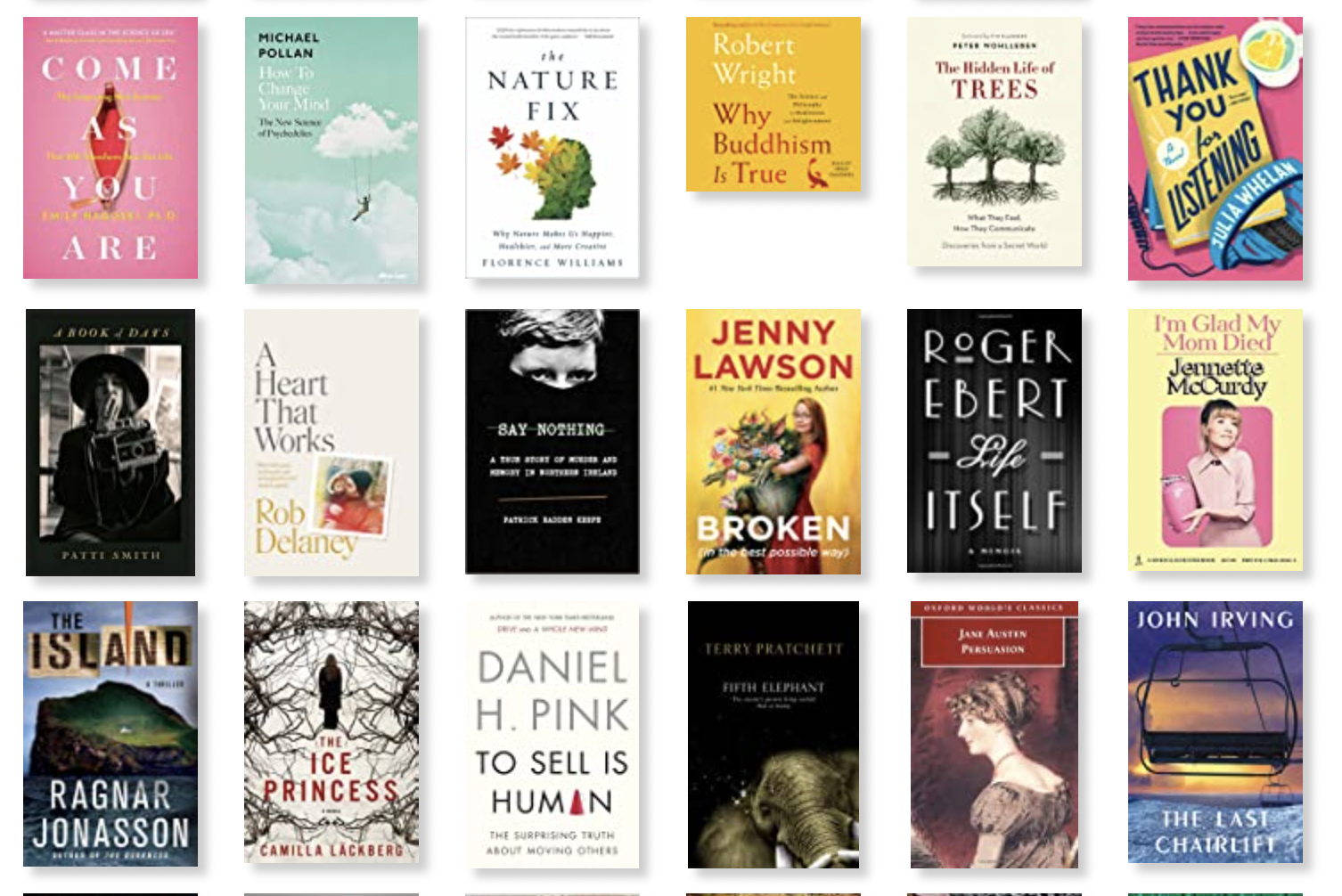
The Ice Princess by Camilla Läckberg (2010, 393 pages)
The Island by Ragnar Jonasson (2019, 336 pages) – 2 in the series
My Sister the Serial Killer by Oyinkan Braithwaite (2018, 226 pages)
The Hunger by Alma Katsu (2018, 368 pages)
Death Notice (book 3, if they publish the translation) by Zhou Haohui
Beartown by Fredrik Backman (2016, 432 pages)
Pick a book by:
Henning Mankell
Jo Nesbo
Arnaldur Indridason
Viveca Sten (but I just read the newest in Dec.)
Lucy Foley
Memoirs / Non-Fiction Reporting
✅ Killers of the Flower Moon by David Grann (great!)
✅ Empire of Pain by Patrick Radden Keefe
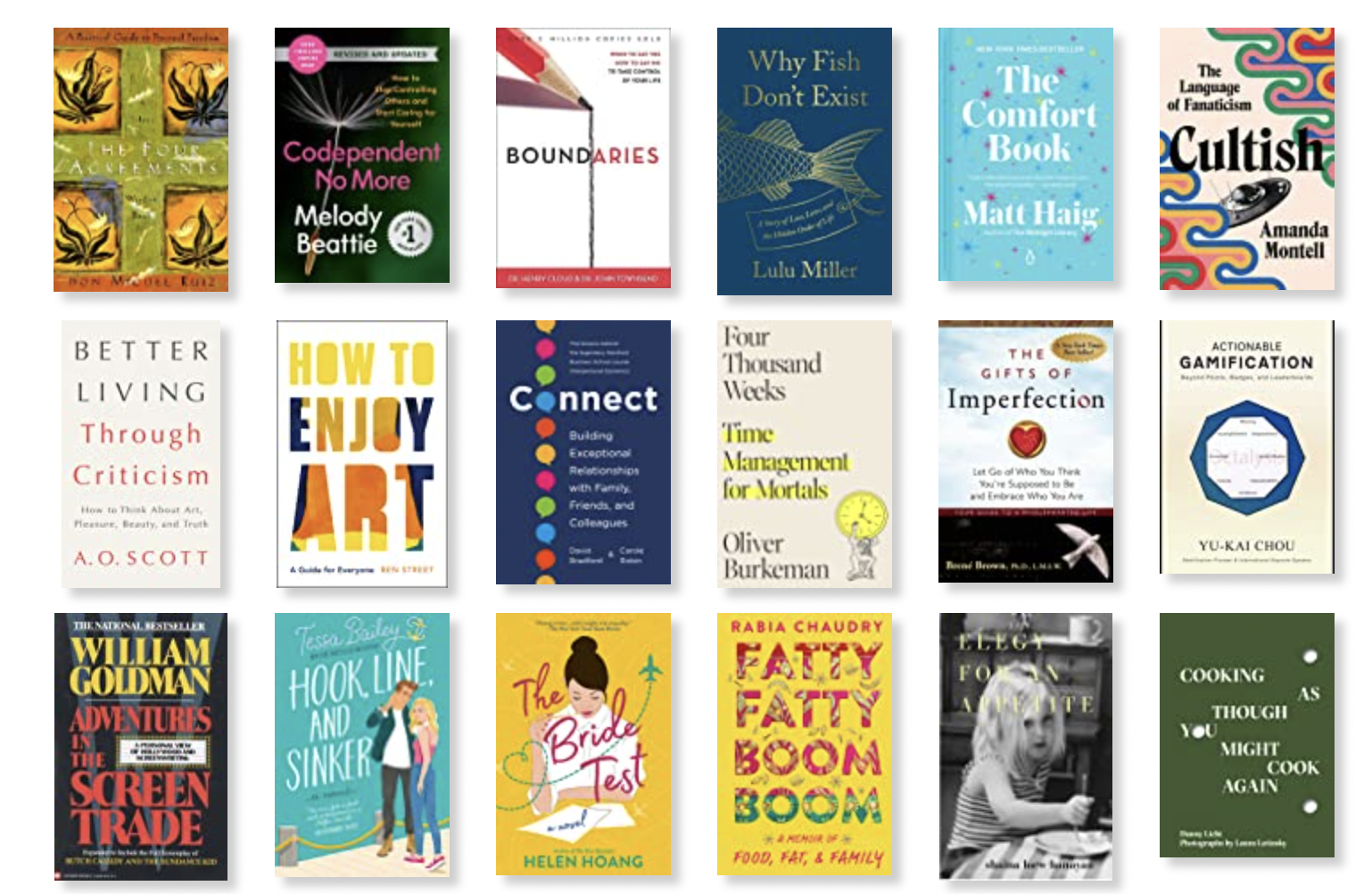
✅ Cultish by Amanda Montell
The Last Black Unicorn by Tiffany Haddish (2017, 288 pages) (own)
Dear Girls by Ali Wong (own) (2019, 240 pages)
Broken by Jenny Lawson (2021, 275 pages)
Taste by Stanley Tucci (own) (2021, 304 pages)
Eat a Peach by David Chang (2020, 306 pages)
“Surely You’re Joking, Mr. Feynman!”: Adventures of a Curious Character by Richard P. Feynman (1985, 356 pages)
I’m Glad my Mom Died by Jennette McCurdy (2022, 320 pages)
Life Itself by Roger Ebert (2011, 346 pages)
Say Nothing by Patrick Radden Keefe (2018, 518 pages)
A Heart that Works by Rob Delaney (2022, 196 pages)
A Book of Days by Patti Smith (2022, 410 pages)
Thank You for Listening by Julia Whelan (2022, 423 pages)
Nature and Science:
The Hidden Life of Trees by Peter Wohlleben (304 pages, 2015)
Why Buddhism is True by Robert Wright (have on audio) (2017, 336 pages)
The Nature Fix by Florence Williams (2017, 226 pages)
How to Change Your Mind by Michael Pollan (2018, 482 pages)
Come as You Are by Emily Nagoski (2015, 400 pages)
How to Do Nothing: Resisting the Attention Economy: by Jenny Odell (2019, 257 pages) (on audible)
Tracking the Wild Koomba
Food and Cooking
Note, I don’t keep cookbooks on this list, but I try to choose memoir-ish cookbooks as much as possible.
✅Cooking as though you might cook again by Danny Licht (2021, 78 pages)
Elegy for an Appetite by Shaina Loew-Banayan (2022, 88 pages)
Fatty Fatty Boom Boom by Rabia Chaudry (2022, 352 pages)
Romance/RomCom:
Bride Test by Helen Hoang (Book 2 – 2019, 296 pages), The Heart Principle (3)
Hook, Line + Sinker Tessa Bailey (2022, 365 pages)
Lessons in Chemistry by Bonnie Garmus
✅ Happy Place by Emily Henry
✅ A Cowboy to Remember by Rebekah Weatherspoon
✅ The Bodyguard by Katherine Center (2019, 282 pages – done)
✅ Red, White + Royal Blue by Casey McQuiston (2019, 318 pages – finishing)
✅ ADDED The Matzah Ball by Jean Meltzer
Anything new by
Emily Henry
Rebekah Weatherspoon
Jasmine Guillory
Jennifer Armentrout
Leadership / Business / Finance:
✅ Traction by Gino Wickman
✅ 10x is Easier than 2x Dan Sullivan and Dr. Benjamin Hardy
Adventures in the Screen Trade by William Goldman (1983, 301 pages) – own on audible
✅ 4000 Weeks: Time Management for Mortals by Oliver Burkeman (2021, 129 pages)
✅ Automate your Busywork by Aytekin Tank
Crucial Conversations by Kerry Patterson (2002, 273 pages) (book and audible)
The 15 Commitments of Conscious Leadership: A New Paradigm for Sustainable Success by Jim Dethmer, Diana Chapman, Kaley Klemp (In-Progress 2015, 377 pages)
Connect by Carole Robin, David L Bradford (2021, 203 pages)
The Gifts of Imperfection – Brené Brown (2010, 208 pages)
To Sell is Human by Daniel Pink (2012, 272 pages)
Actionable Gamification: Beyond Points, Badges, and Leaderboards by Yu-kai Chou (own) (2015, 513 pages)
Creativity: Writing and Creating:
✅ Big Magic Creative Living Beyond Fear (re-read) by Elizabeth Gilbert
The Practice: Shipping Your Creative Work by Seth Godin (2020, 274 pages)
Show Your Work! by Austin Kleon (2014, 225 pages)
Steal Like an Artist by Austin Kleon (160 pages, 2012)
How to Enjoy Art by Ben Street (2021, 160 pages)
Better Living Through Criticism AO Scott (2016, 282 pages)
Look for new:
Cal Newport
David Epstein
Fitness and Health / Mindfulness / Brains
✅ Cultish: The Language of Fanaticism by Amanda Montell (2021, 291 pages)
✅ Outlive by Peter Attia
✅ How to Keep House While Drowning by KC Davis
✅ Adult Children of Emotionally Immature Parents by Lindsay Gibson
Built to Move by Kelly Starrett + Juliet Starrett
Listen Like You Mean It: Reclaiming the Lost Art of True Connection by Ximena Vengoechea (2021, 337 pages)
Unmasking Autism by Devon Price (2022, 304 pages)
The Body, A Guide for Occupants by Bill Bryson (2019, 491 pages) owned on audible
The Power of Kindness: The Unexpected Benefits of Leading a Compassionate Life by Piero Ferrucci (2007, 354 pages)
The Comfort Book by Matt Haig (2021, 231 pages)
Why Fish Don’t Exist by Lulu Miller (2020, 256 pages)
Boundaries: When to Say Yes, How to Say No to Take Control of Your Life by Henry Cloud and John Townsend (1992, 324 pages) (updated version on Audible)
Codependent No More by Melody Beattie (1986, 278 pages)
The Four Agreements by Don Miguel Ruiz (1997, 163 pages)
Look for new:
Mary Roach
Bill Bryson
And that’s a wrap! Will I get to all of these? Absolutely not. Will I try to expand on the diversity of my thought and add things along the way? Yes indeed!
What’s on your shelf this year? What’s up next? Here’s to a year of good reading!
After a great 2019, and a middling 2020 for reading, and an even worse 2021 (lots of half read books with my attention as shot), here I am with my renewed sense of enthusiasm in the new year!
Having a reading list helps me make decisions about getting in quality reading without falling into decision making slumps. I aim to have a large percentage of my reading written by women, POC, and international writers; and typically read a handful of Man Booker short list titles. I typically make a list of my favorite categories, and then will supplement or swap as I find reading that calls out to me. I make room for the synchronicity of just picking up any random title, but I always have a backup!
A few notes and observations:
Audio Books: yes, I definitely count audiobooks as reading. I process information better when on my walks and runs, and thus prefer listening to memoirs or non-fiction this way. It’s also easier for me to stay engrossed and follow along while I’m moving physically.
Don’t forget FOOD! For the past several years, I read almost zero food memoirs, literature, or history – some of my favorite topics. So I made this one of my kitchen resolutions this year! (Again.) I’m also re-reading cookbooks
The library is your friend. While I always try to support local book stores – I’m also a huge fan of my local library – grabbing things off the Speed Read Shelf is my jam. Plus you can leave with a large stack and it always feels like I’ve won something.
As always, still working my way through my list of Personal Leadership Development Books, and the BBC Big Read. I also read quite a few business books for work – whatever I need to expand my ideas and sharpen my skills. Our team has quite a few readers, and an up and coming leadership book club has us reading (me re-reading Brené Brown’s Daring Greatly, next.)
January:
Re-read Atomic Habits by James Clear; Tiny Habits by BJ Fogg (done!)
Rebecca by Daphne du Maurier (done!)
We Should All Be Millionaires by Rachel Rodgers (in-progress!)
Beartown by Fredrik Backman
Project Hail Mary by Andy Weir
Gideon the Ninth by Tamsyn Muir
Re-Read: Dare to Lead by Brené Brown (work book club)
Braiding Sweetgrass by Robin Wall Kimmerer
What it’s Like to Be a Bird David Allen Sibley
Categories to choose from: (I often choose outside these, but I find that when I’m in the mood for a particular feeling, it breaks down by this type of category.)
YA fiction or Fantasy
Gallant by VE Schwab (March 1 Release)
Serpent and Dove by Shelby Mahurin
The City of Brass (The Daevabad Trilogy) by S.A. Chakraborty
In the Serpents Wake (Tess of the Road #2) by Rachel Hartman
Skyhunter by Marie Lu
Leadership / Business / Finance:
Crucial Conversations by Kerry Patterson
The 15 Commitments of Conscious Leadership: A New Paradigm for Sustainable Success by Jim Dethmer, Diana Chapman, Kaley Klemp
Think Again by Adam Grant (in-progress!)
Working Backwards by Colin Bryar and Bill Carr
Writing and Creating:
The Practice: Shipping Your Creative Work by Seth Godin
Show Your Work! by Austin Kleon
The Boron Letters by Gary Halbert
Fitness and Health / Mindfulness / Brains
Listen Like You Mean It: Reclaiming the Lost Art of True Connection by Ximena Vengoechea
How To Do Nothing: Resisting the Attention Economy by Jenny Odell
The Body, A Guide for Occupants by Bill Bryson
The Power of Kindness: The Unexpected Benefits of Leading a Compassionate Life by Piero Ferrucci
Gripping / Thrilling / Literary:
My Sister the Serial Killer by Oyinkan Braithwaite
The Hunger by Alma Katsu
Memoirs / Non-Fiction Reporting
The Last Black Unicorn by Tiffany Haddish
Taste by Stanley Tucci
Eat a Peach by David Chang
Empire of Pain: The Secret History of the Sackler Dynasty by Patrick Radden Keefe
“Surely You’re Joking, Mr. Feynman!”: Adventures of a Curious Character by Richard P. Feynman
Books to Finish (technically there are many more half-reads over the past few years):
The Body Keeps the Score by Dr. Bessel Van Der Kolk
Dutch House (Audiobook?)
Caste by Isabel Wilkerson
Circe by Madeleine Miller (may switch over to Kindle)
One of the key insights of the past decade: if I write it down on a list, I’m more likely to do it.
Lists enable me to dream and achieve in ways that I wouldn’t otherwise be able to. They are the structure that enables me to envision more and do more. I keep master lists, reading lists, home projects, work lists, and more. Some are written as a way to to plan, others as a way to acknowledge achievements – one of the highlights this year was my “movie consumption list” – my goal to watch 52 new to me movies! (I even have lists of lists.)
One of my favorite lists to come back to each year is my Kitchen Resolutions: my commitment to spending more time doing the things I love: cooking, reading about food, talking about food, and eating…. all of the food.
I’ve been writing these resolutions for more than a decade, and some of them pop up year after year – affirm doing good things that work – and a handful are new each year. You can take a peek through previous years here: (2012) (2016) (2017) (2018)
First, here are some of my previous resolutions I’d like to continue with:
My weekly meal planning process – this has gone through different iterations over the years – waffling back and forth between digital and paper, depending on mood. Currently it’s a revised template that ends up either in my Evernote or paper journal (which I then snap a photo of before heading to the grocery store.) Each week I sit down and assess the things in the fridge or freezer that need to be used up, plan out things to batch cook, and dream up my dinners, lunches, and snacks. Then I shop.
Bucket list restaurants – I can count the number of times I ate out on my two hands in the past year. While I’m all for home cooking, I’d like to continue to eat my way through some of the local gems we have in this area. (To that end, I use the Eater 38 as a guide.)
100(0) fruits, nuts, and seed to try – here’s my list; quite a few of these I’ve definitely eaten (but can’t actually remember eating…. hello aging) so I’ve left them on my master list to actually re-try for the record. A good friend is on a quest to fall in love and try new vegetables, so I might rope her in to some of them and see how we do.
Minimize the amount of stuff on the counter in my kitchen –I generally like access to “all the things” in my kitchen. That doesn’t mean that they have to all be on the counters everywhere. This year I added a handful of new pots and pans without getting rid of other stuff, and it’s clear that I need a better storage solution for everything. (I did however add spice racks to my kitchen, which was a good move!)
Cooking recipes from cookbooks – while I’ve never been one to actually cook recipes from cookbooks regularly (I usually read, learn, and adapt), Alison Roman’s Dining In: Highly Cookable Recipes had SUCH great recipes that I cooked many of them this year, and will concede that sometimes it’s fun to let someone trusted “take the wheel”. I’ll make an effort to add at least one cookbook recipe to my weekly meal plans, and combine this with some favorite cookbook re-reads:
What other resolutions are on the docket for 2020?
Blogging my weekly Good Things: yup, back on the wagon. I’ll note that one of the biggest differences between writing each week and not writing each week (hello, crazy back half of 2019!), was that without the suggestion of public accountability, my meals got much more boring, and not in a good way.
Cookbook Dinners: over the past few years I’ve made some half-hearted attempts to form a cookbook club, but I think I’ll take it up again this year, even if it’s only me doing the cooking. The last one I did was Zahav, and it was a good time for all. (Despite the recipes needing more seasoning, but I digress.) My goal here will be a minimal and doable 3 times this year.
Revise my backup list: (a version of it here) even when I meal plan, some days, I just want comfort food that requires little effort and really only muscle memory. A bowl of rice with yogurt, a box of Annie’s macaroni and cheese, or gasp – TJ’s chicken nuggets. I’m going to peruse Dinner: A Love Story, because I seem to recall that she has good inspiration here.
Food memoirs and literature: while I made it through more than 52 books in 2020, there was NARY a food memoir or food history, and boy do I need to change that. It’s one of my favorite genres. To do this week: add a handful of these to my January reading list to get off on a good start.
Garden 2020: this year I made the effort to grow more in my pots and had ample fresh herbs. I also weeded and tended to the back plot – and grew some medium-happy potatoes (I’ll probably go for bigger ones next year), an outsized rosemary, lavender, and more.
Other notes: taking a new stab at a Kitchen Projects list, having people over for casual meals more often, cooking with my Turkish spices more often, making a batch of ice cream every so often, baking pumpkin chocolate chip cake.
Do you have any kitchen resolutions this year?I’d love to hear about them!
There’s something incredibly satisfying to recapping my week by looking through the photos on my phone these days. This is my blog version of a regular gratitude practice – something I’ve committed to over the past few years and can’t recommend enough in order to really appreciate the good things in life. (And for that matter, I appreciate each and ever one of you reading this. Hello!)
{Week 5} Good Things
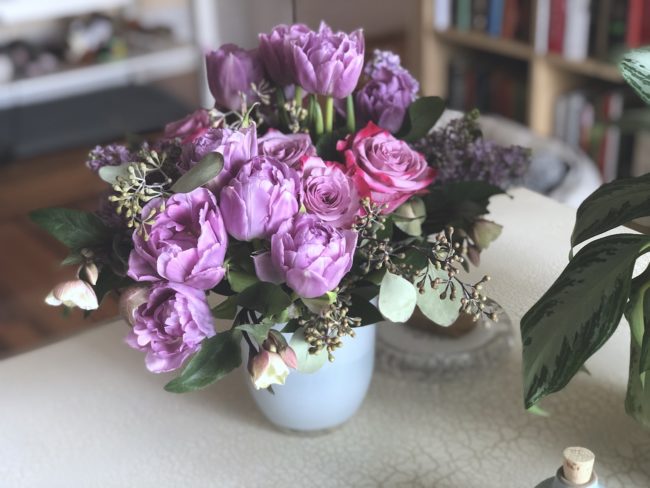
a gorgeous floral delivery from Winston Flowers – my aunt and uncle are excellent at pick me up gifts. These purple flowers are stunning, and they’ll last for a while!
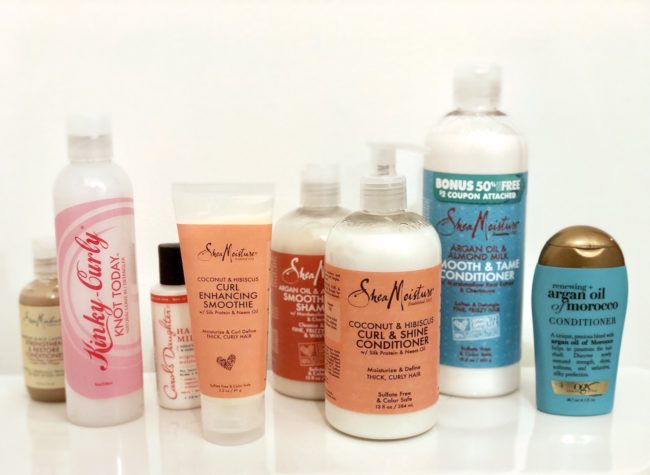
my curl quest – last week I ran out of conditioner, and decided to go wild testing out a bunch of new options. My typical go-to is Acure, which I pick up at Whole Foods. But to embrace my curls, I know that there are better options, so I polled some curly friend (and the cashier at Marty’s) and ended up getting a bunch of sample size – Shea Moisture, Carol’s Daughter, Kinky Curly, Cantu, and the Trader Joe’s Shea Butter and coconut oil hair mask. I’ll keep you posted.
Movement, amplified. In my quest to “spend out” – gift certificates, passes I haven’t used, memberships, I realized that I had a 10-pack to OrangeTheory that is going to expire this month. So I took my first class on Friday, another today, and I have my next two scheduled this week. Not sure how this is going to affect my year long run streak – so I’m going to be mindful of not overdoing it.
Yoga: four times! To ensure my mobility, stretching, and well, because I founded the company and get all the free yoga and meditation I want: I took FOUR! live classes onOmpractice this week. I’d love for you to join me! Unlimited membership is only $5 for your first month, and I’d be happy to meet up virtually for a class on me! Here was my lineup:
Yoga Nidra with Amya cross between yoga and meditation – all about conscious relaxation, a chance to renew, and recharge yourself. Mondays and Wednesdays at 1 pm ET, 10 am PT. (Amy was in the polar vortex of the midwest while I was complaining about our 10 degrees…)
Yoga for Office Workersis a 25-minute break from the world. Tuesdays at 3:30 pm ET, 12:30 pm PT with Charina. Harkening back to my Runkeeper stretch-o-clocks! (Charina was actually in her “outside office” for class because…. southern California..)
Chair Yoga with Marie. Chair yoga is great for anyone, but is especially recommended for those who want a gentle practice. One of the surprising things was how much I enjoyed seated sun salutations!
Yoga for Low Back Pain with Traci – a perfect low impact class. Thursdays at 7:30 pm ET, 4:30 pm PT. Also – Traci was a sport for not laughing at me as Bertram decided that instead of his usually nap, he was going to “assist” me by licking me, sitting on the mat, and generally speaking being adorable but in the way.
Two large library hauls: one of my favorite “activities of abundance” (a.k.a. making your self feel better through shameless acquisition without affecting your wallet) is checking out a huge stack of library books. I had to go to two different libraries this week. (On the literary note, I had about 50 recommendations from friends that I was going to post here but the list was too long. I’ll make a separate post if you need ideas of good reading!)
Team Retrospective: each week, one of my favorite personal activities is to reflect over the week with three questions: what worked well, what didn’t work well, what do I want to stop doing? This is straight from the “agile” playbook that most tech companies use to keep their teams celebrating their wins (hello, gratitude practice), and learning from their misses. We had a *great* team Retro this week!
New folks on my weekly *Do The Thingvirtual co-working. Each week I gather together friends (from around the world!) for a weekly digital co-working session on Wednesdays at 1:30 – 3pm Eastern. We go around, each share what we want to get done, and then I mute everyone and we get to work. Want to participate?Sign up here.
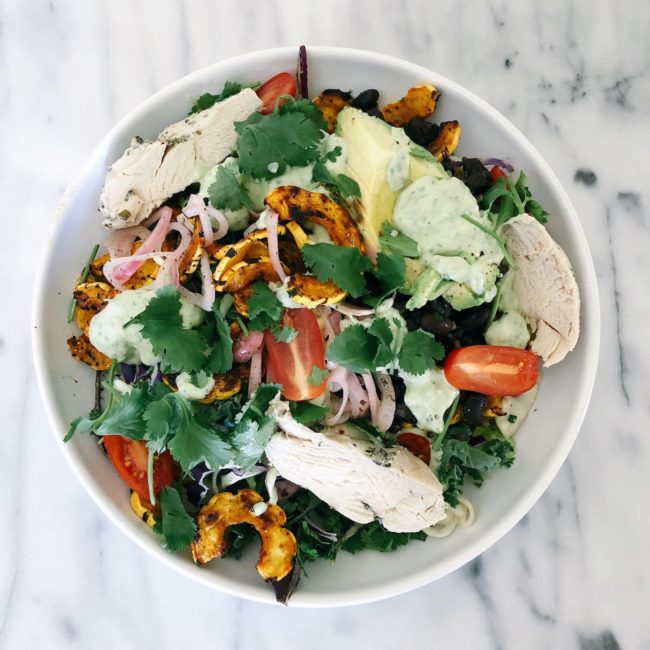
On that note, I had an “in-person” friend come to participate in *Do the Thing hour this week. Amanda came with lunch she had prepared for us, and work to do! Salad (TJ’s cruciferous crunch), roasted delicata squash, warm farro, freshly made black beans, an herb-buttermilk vinaigrette, pickled shallots, an avocado, and tomatoes. I added a little bit of chicken and cilantro from my fridge. My friends are amazing.
{Delicious Meals:}
Got ahead of myself there with a delicious meal in good things! There were so many more!
This was another week absolutely smitten with Alison Roman. Seriously, I don’t think I’ve cooked this many recipes out of a cookbook in years. If you don’t have your own copy of Dining In, RUN!
On that note, I think I’ve cooked more from cookbooks in general this month than I have in the past five years.
Here’s some of the highlights this week:
Takeout From Kimchipapi. Kimchipapi is new to Allston on Harvard street. Korean fusion poke bowls and other good stuff. (#SendNoodz.) Recommend! I had the crab fries – thin fries topped w/ crab salad, spicy mayo, eel sauce, fish eggs, scallion, and black sesame. And then a make my own poke bowl with kale noodles (thin starchy noodles), spicy tuna tartar, salmon, crab salad. Pickled radish, pickled ginger, kimchi, fresh corn and carrot, spicy mayo, ponzu sauce, fish eggs and roasted seaweed. I regret nothing.
Black bean soup with chimichurri chicken. No shame, my secret recipe is that I use Goya black bean soup in the red can. It’s excellent.
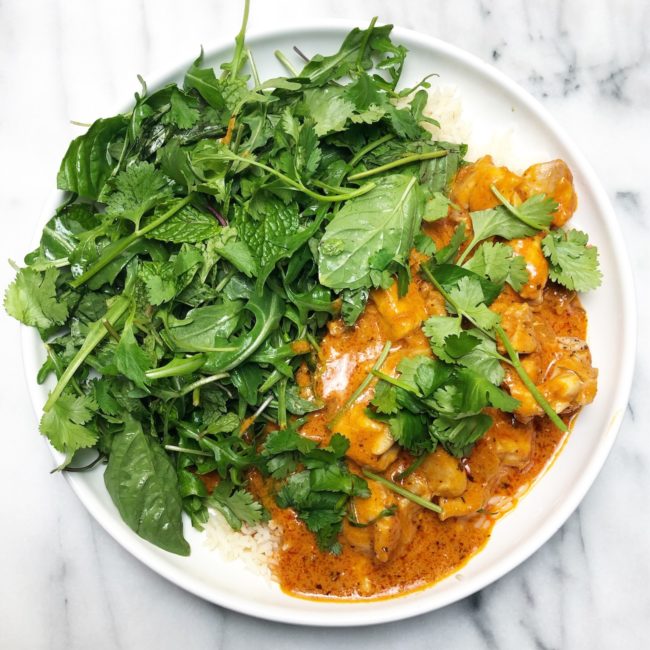
Chicken Tikka Masala with chicken thighs arugula salad with mint, basil, and cilantro. There’s no recipe here. Truthfully, I ordered a container of sauce from Shan-a-punjab, and then cooked some chicken thighs in it. Paired with an arugula salad with mint, parsley, basil, salt, pepper, and lemon juice. My salads are usually half greens half herbs these days.
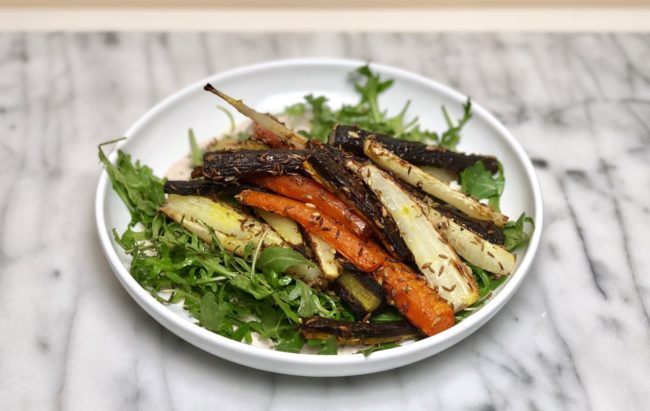
Alison Roman’sturmeric roasted carrots with seeds and labne. This was *outrageously good*. I used Samira’s Homemade labne with black olives as the base for the recipe. If you are in New England, I highly recommend picking up some at Whole Foods!
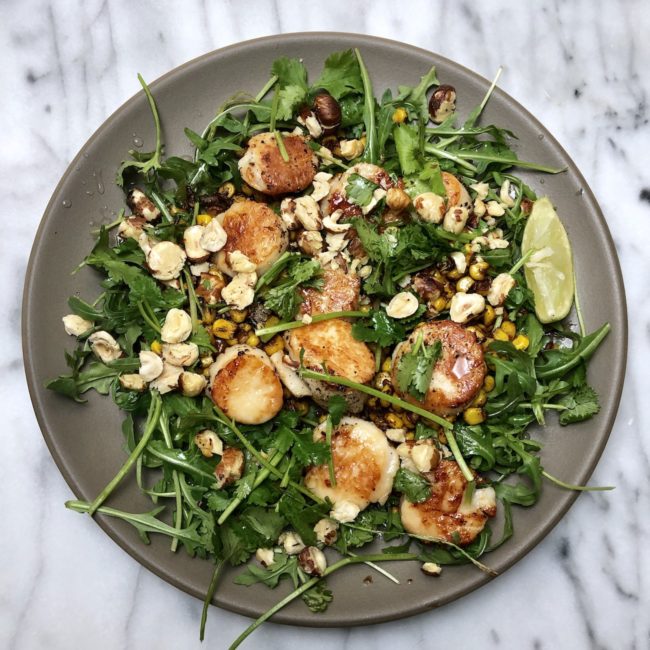
Alison Roman’s scallops with corn, hazelnuts, and brown butter chermoula. Over another arugula salad with cilantro and some lime. Another complete stunner of a dish. Also: the key to golden scallops is to NOT TOUCH THEM when they are cooking in the pan. Look at these beauties.
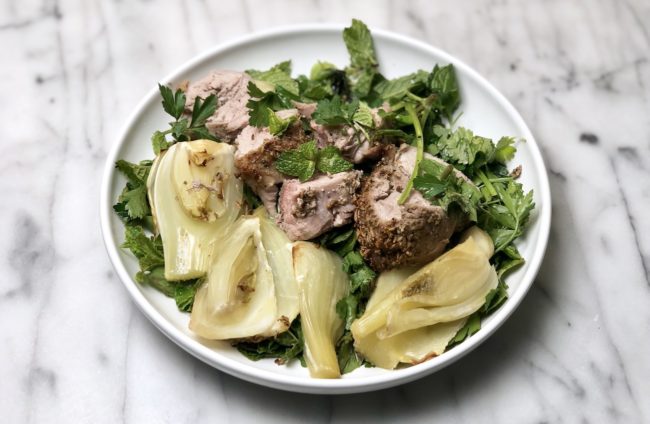
Alison Roman’s fennel rubbed pork – so, technically I did a mashup of two of her recipes here because I had pork tenderloin and not chops, and wanted to roast everything while luxuriating in a long shower with one of my new conditioners. The pork marinates in advance in a seed bath of glory. I opted for the double fennel situation, because… why not?
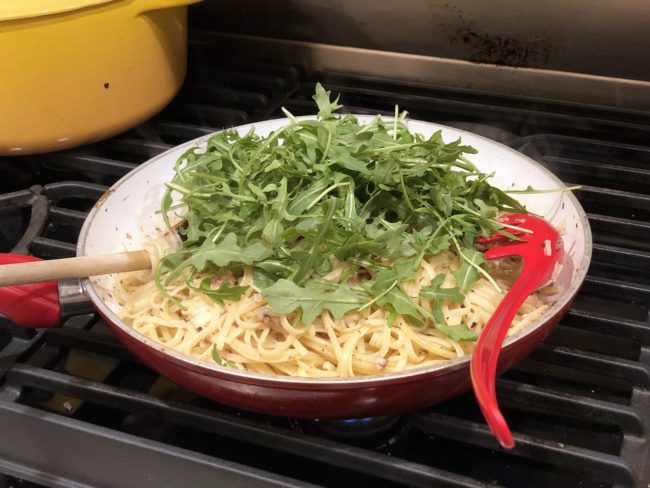
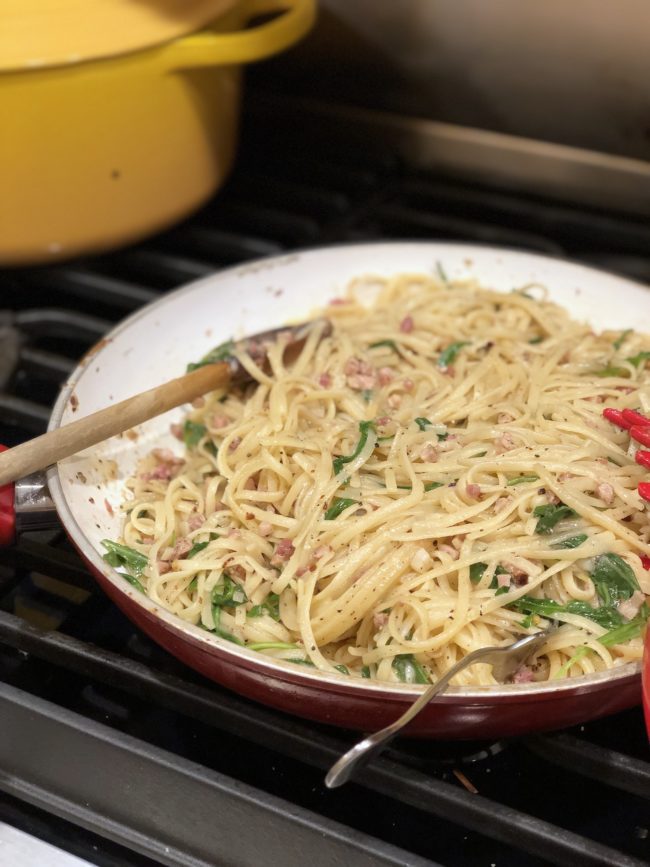
Chrissy Teigen’s Lemony Arugula Spaghetti Cacio e Pepefrom Cravings. You guys. This dish. Here’s the goodness: lots of crispy pancetta, olive oil, garlic, black pepper, red pepper, lemon juice, cheese, more cheese. And then you add arugula for virtue and bite. The recipe is here, but I recommend the cookbook.
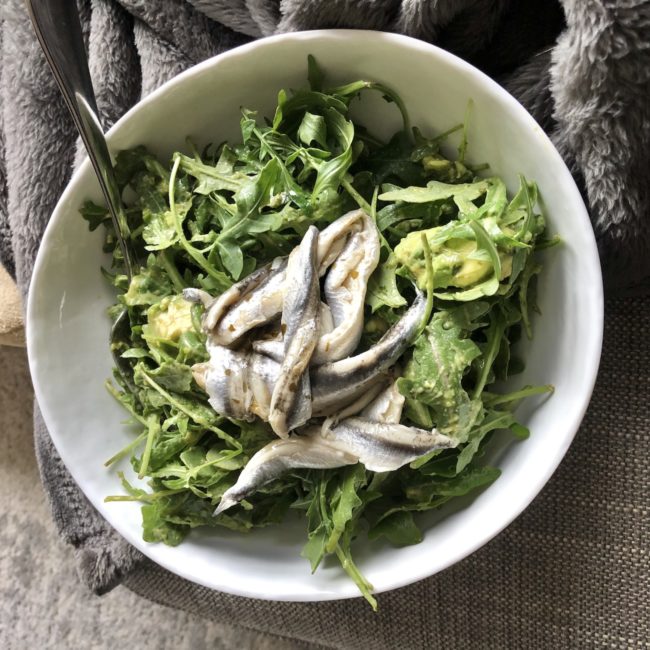
Arugula salad with avocado, green goddess, and marinated anchovies. Apparently I’ve just been craving arugula for weeks and am finally fulfilling my cravings.
Well, that’s about it for this week!
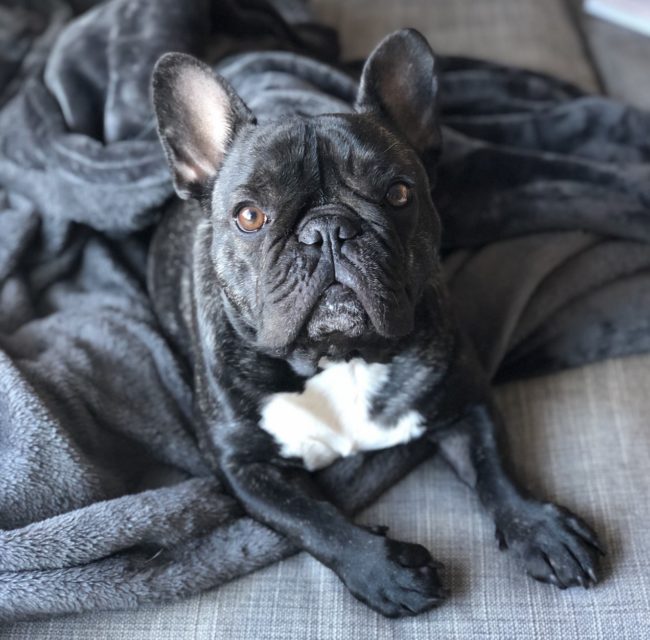
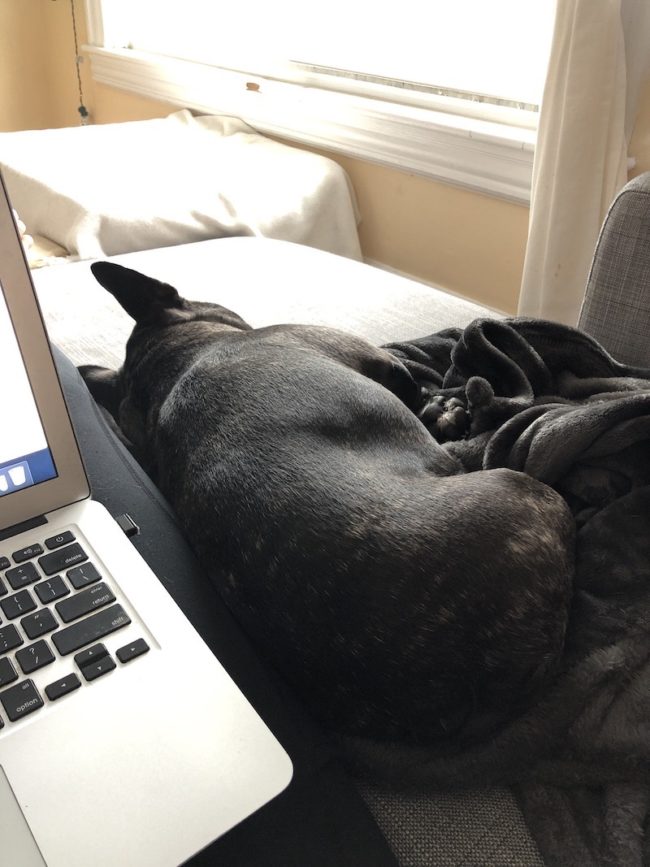
I’ll leave you with this week’s best dog portrait: Bertram, in his element.
Here’s to a great week! –– xo Sam
PS: every month or so I send out a newsletter of wellness wisdom, good things, reading, and more. I’m due for a new one imminently.
Well hello there! A fond dispatch from my couch, where I’m snuggling with my pup, avoiding both shoveling and the outdoor mile that’s going to happen as soon as it stops sleeting. So here I am, taking a moment to pause and reflect on the first few weeks of the year.
2019, so far: there has been hard work, discomfort, challenges, and growth, but also, January has been full of running, reading, writing, watching new films and taking myself on creative dates. I’ve been reading new cookbooks, and cooking with intention. I’ve been actually cooking from my cookbooks, which I must admit is a bit of a new revelation. Normally I read them, absorb, and create something from the ether – admittedly, having someone tell me what to do in the kitchen via their “rules” a.k.a. a recipe – is a lovely change of pace.
My resolutions this year are not grand or particularly audacious – they are simply to continue to do more of the things that I love to do, do more work to discover those things, to continue the habits that give me energy, and reduce the activities that drain me. (I’m looking at you, endless scrolling through my phone.)
Life is complicated, at times challenging. My year so far hasn’t been without these things. But, it’s easy to dwell in negativity, unless you cultivate the habit of focusing on the good things – and that’s just what I do.
To that end, one of my daily activities is practicing gratitude – taking snapshots of my everyday life on my phone, writing out the things that I’m thankful for. Noticing more. Trying, as best as possible to fill my life with little things (and big things) to be thankful for.
That said, it’s no surprise that 60% of the photos of my phone are of my dog.
But the first few weeks of the year I’ve been good to myself, and my hours have been filled with many good things, big and small. Here are some of them.
{Week 1}
I started the year with a 5k race. I’ve run the same race several years in a row, and I love the ritual of lining up at the same starting line, with my new intentions, and a year’s worth of improvement. Last year it was about 13 degrees, this year, closer to 60. I beat the past several years of times, my reward for a year of running a daily mile in 2018.
Inspired by my friend Christina, I started a yearly film project – a spreadsheet where I track the movies I watch, with a goal of 52 (new to me) movies this year. Do you have any suggestions for me? So far, some of the better ones have been Quartet, A Man Called Ove, and To All The Boys I’ve Loved Before.
Yes, I’ve been watching Marie Kondo. I came across an interesting conversation questioning the choice of translation of “tokimeku” literally (flutter), which is somewhat passive, to it’s permutation for the US audience as “spark joy” (active).
My co-founder Chris gave me an ivy plant of significant provenance. It’s living in our new office space in Springfield at the home of Valley Venture Mentors.
My weekly creative date: I took myself to the Museum of Fine Arts for the final weekend of the Winnie the Pooh exhibit. It was so utterly charming.
Delicious meals:
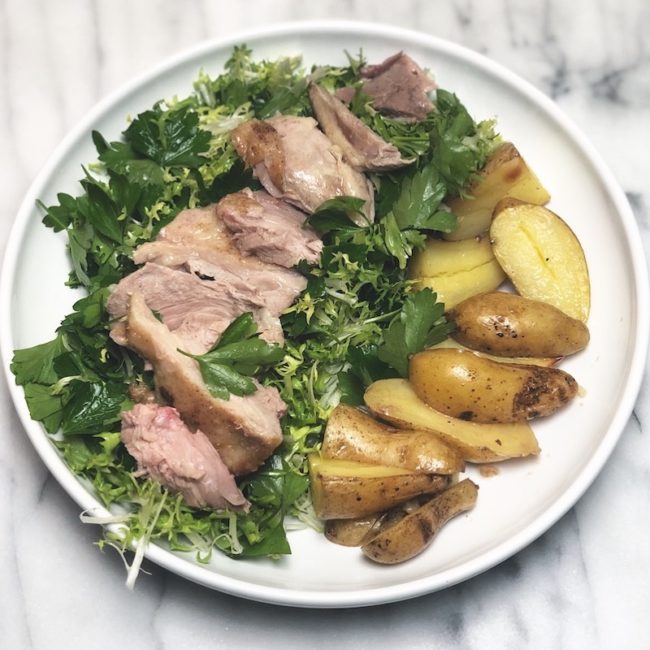
Duck breast, over frisée and parsley salad with baby potatoes roasted in the duck fat. (Picture up top.)
Delivery: Shan-a-punjab. Butter chicken, garlic naan, masala chai. All of the condiments.
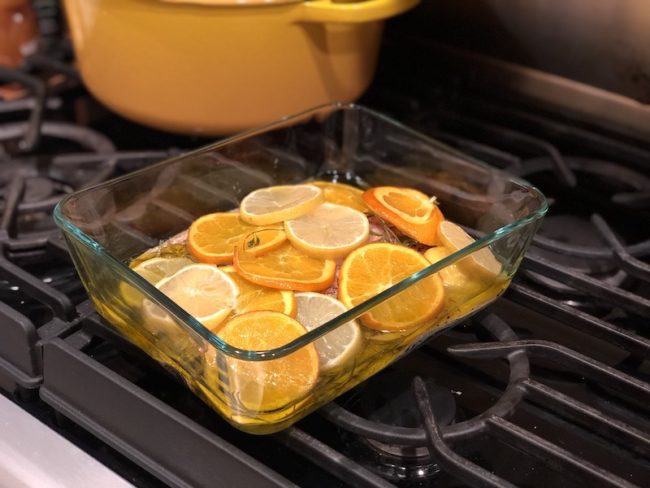
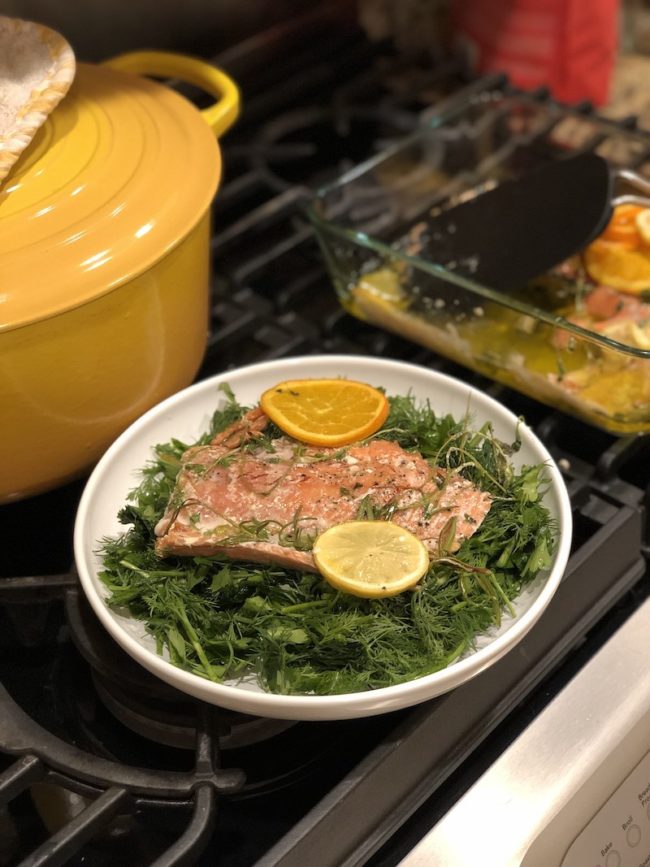
Alison Roman’s Slow Salmon with Citrus and Herb Salad from Dining In: Highly Cookable Recipes. Copious amounts of olive oil, and a winner.
Leftovers: a bowl of quinoa with leftover Slow Salmon, feta, and Trader Joe’s fresh green goddess dressing.
{Week 2}
A dentist appointment. Overcoming fear and dread to take care of those teeth.
Our first week in the new office space!
My creative date: I took myself out to see Spider-Man, Into the Spider-verse. It was excellent, I highly recommend it. My planned dinner at Cava didn’t pan out (the movie got out too late), so I came home and toasted myself a St. Viateur bagel with cheddar on one half, and Soom chocolate tahini on the other.
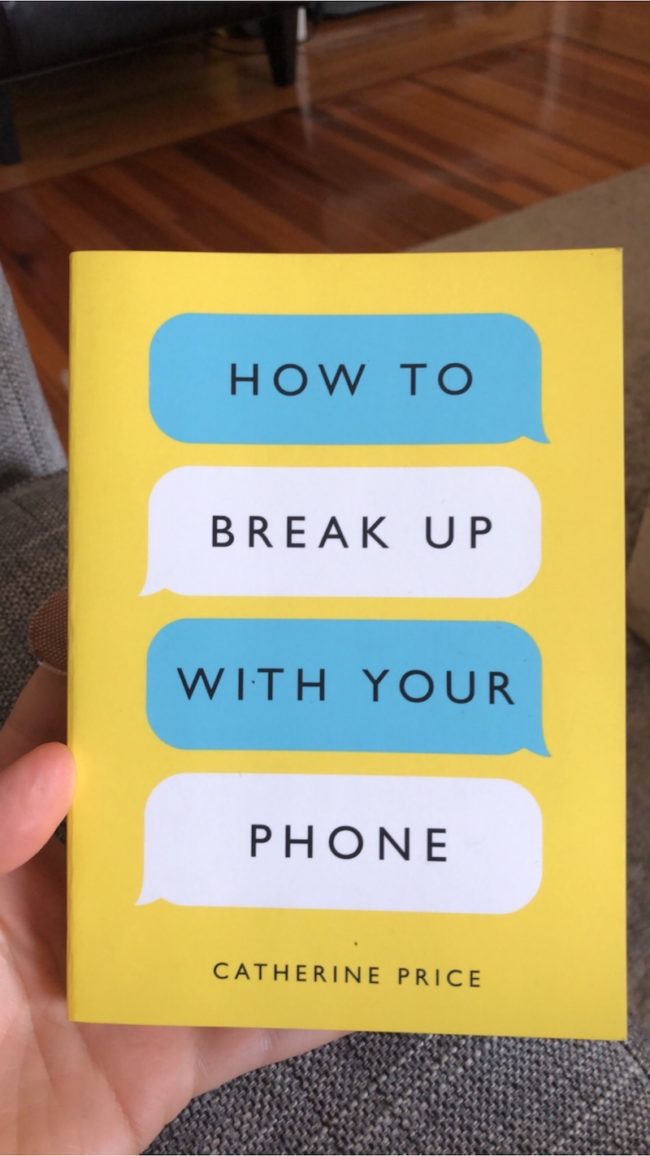
Reading: “How to break up with your phone” by Catherine Price. I’m not looking to dump the phone all together, but shift to much more mindful usage. This had some pretty good specific tactics.
Delicious meals:
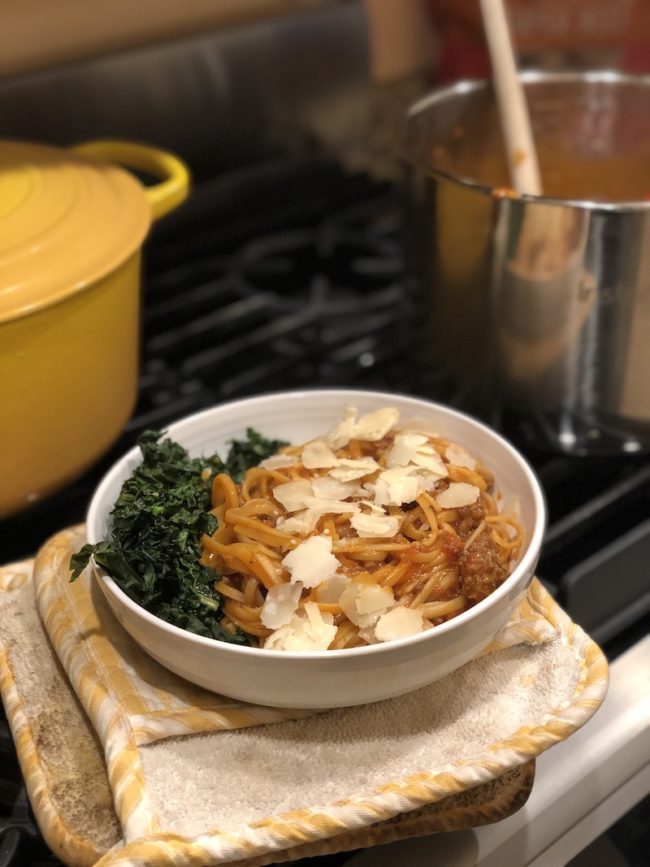
Leftovers: Instant Pot Spaghetti, my favorite Epicurious kale and date salad, and roasted brussels sprouts with lemon tahini dressing.
A food court gyro with rice pilaf and greek salad in Springfield. Surprisingly delicious!
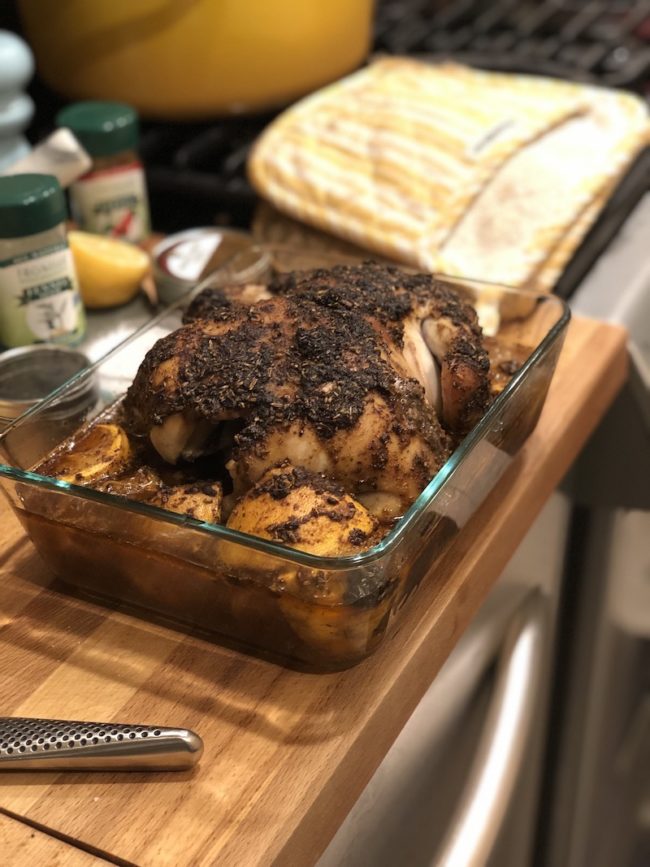
Alison Roman’s Paprika-Rubbed Sheet Pan Chicken with Lemon from Dining In: Highly Cookable Recipes. Repurposed for several meals: as is, the next day with autumn harvest sauce. After that with eggs, and olive labne. And then after making a few different meals, I made stock with the carcass, and am still enjoying it.
{Week 3}
I realized that I could set my computer up with Zoom open to watch my dog sit in the window when I’m at the gym.
I let my curls stay curled.
Another great day at the office. A bonus? Huey sitting behind me. Have I mentioned how much I love my Push Journal? I’ve been using these for much of the past year, and am loving my Turquoise (Ompractice colors!) with rose gold spiral binding.
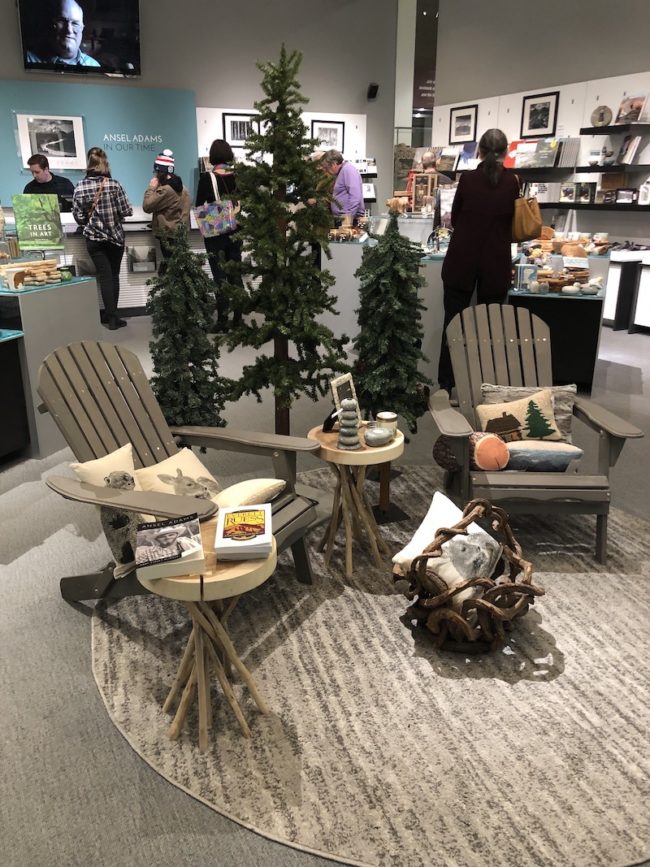
Creative date: I took myself to the MFA to see the Ansel Adams exhibit (do go!) – fully enjoying an hour an a half of trees, the West, up close, and far off. A few things to note: I was completely captivated by some of the other artists’ works they chose to complement the work of Adams. I’ve been entranced by the work of Laura McPhee for over a decade. Her pieces in here were stunning. Also captivating: the works of Abelardo Morell, making captivating art with overlaying these iconic views with images of the ground. And then finally, this bright pink chromeograph by David Benjamin Sherry of dunes. So good. I’ll note, finally, that the instance of the gift shop at the end of this exhibit was possibly one of the most overtly thematic experiences I’ve seen the MFA attempt.. for better or for worse. I restrained myself from purchasing the faux fur fashion vest or sitting in the Adirondack chairs huffing pine candles. (Topped off the evening with a parking space directly in front of Cava for pickup.)
Delicious Meals:
Turkish green beans and zucchini, a love letter to myself from my summer freezer. With feta, yogurt, and soft boiled eggs.
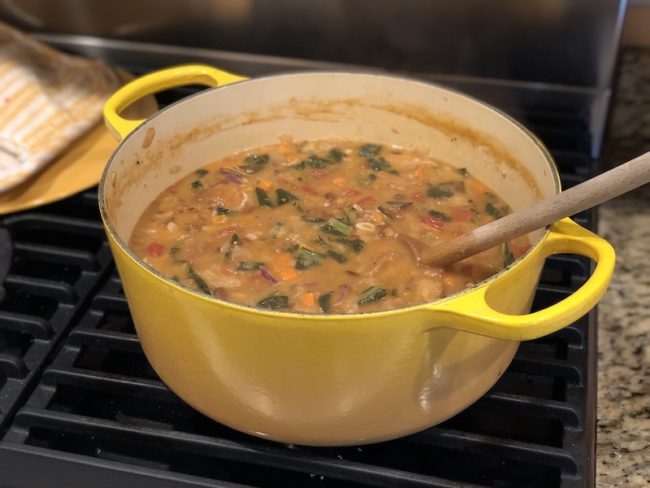
Ribollita from Samin Nosrat’s Salt, Fat, Acid, Heat. Pictured above, in the pot. What a beautiful soup with so many layers of flavor. (I’ve been eating it now for days.)
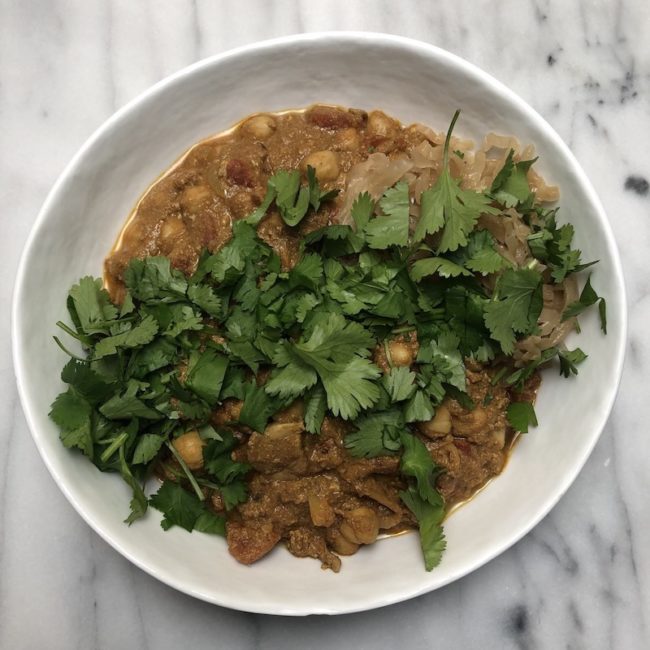
Jossy’s Chicken Liver Curry from the Leon cookbook. (Pictured below.) I didn’t have enough chicken liver, so I added a can of chickpeas. Shout out to Patak’s tikka masala paste, which I ordered from the internet. It’s a pretty glorious base paste.
I had to look it up, today. There are 40 days left of fall. 50 days until 2019 has arrived.
I woke up this morning – for the second time, the first was with the dog needing a 4:45 am potty break, parents of toddlers, I feel for you – and thought, today is a good day to write. So here we are. Writing, like many things, begets writing. So here I am.
We’ve passed Daylight savings, and have been weathering the transition. Fall is usually my favorite season – the lights twinkling through the auburn, red, and golden leaves. Sweaters, and layers, and hot hands slipped into my pockets before heading out into the neighborhood. Walks around the Wellesley campus are spectacular this time of year. In my kitchen, squash gets roasted, the Pot finds itself in use, and I find myself forming a re-acquaintance with hot chocolate and those perfect vegan mini marshmallows from Trader Joe’s. Why they aren’t available year round is a mystery to me.
Truthfully, I haven’t quite found myself feeling the same level of enjoyment of late. After a long stretch of feeling content, I’ve been back feeling less-than, lately. Noticeably abrupt at the changing of seasons, the optimism of summer shifting into a feeling of stuck-ness, of in-between. While this has been one of the most full years of my life professionally, it has also been challenging, and come fall, I’ve found myself squirreling away energy to make it through the days.
Friendships and relationships have suffered. A sense of ease has been missing, but somehow, anyway I can, I know I’ll find myself out the other end soon. Whatever that other end may look like. And it’s hard not knowing, isn’t it? So when I feel that feeling of un-ease, that’s where I know to double down on my self care – to focus not on the past or an uncertain future, but the present, right here, right now. Self-care is a form of meditation. It’s doing the things that we can do, in this moment. To be present, and to feel rooted, in the now.
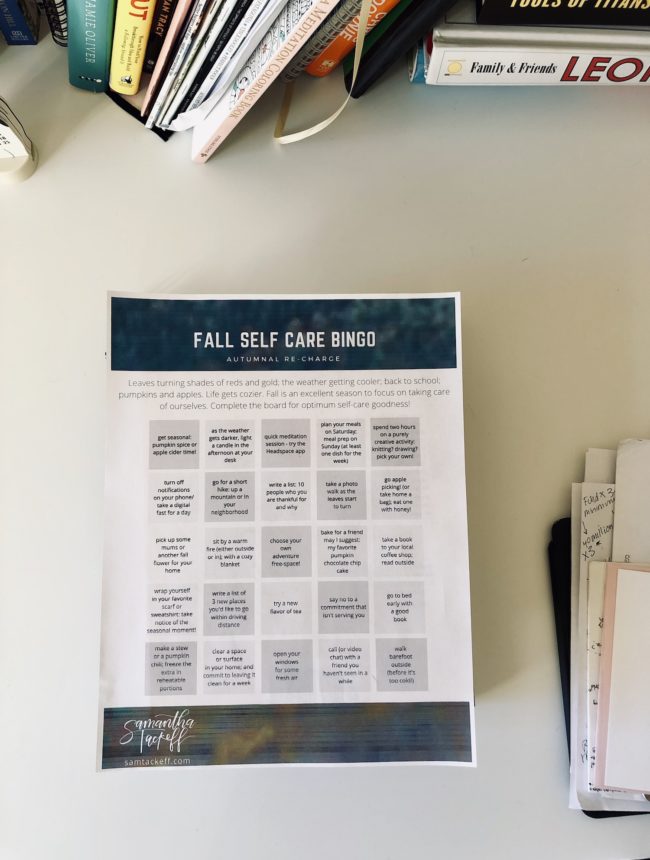
This year, like last, I’ve been slow to post my seasonal self-care ritual: my Fall Self Care Bingo. But we have 40 days left of the season, and the board is a great way to help fill your days with the goodness needed to get through it all, without forgetting to notice the present moment. Hopefully it will bring you some enjoyment as it does to me. I think I’ve missed the boat on apple picking this year, but the rest are totally doable as the season goes on.
Grab your copy to download and print here:
[Writing as Self Care]
I’ve been thinking about ways to write more, as a form of creative outlet, catharsis. Each morning, I write to myself. Long handed morning pages – not always three, but at least one, in my notebook. This practice keeps me focused. Each morning, I also start with gratitude. A list of three things, or ten, that I’m grateful for.
I’ve taken back up with The Artists Way – I pick up the book and put it down again every so often, picking up on the creative exercises from Julia Cameron’s seminal course in discovering and recovering your creative self. There’s a passage in there that I’ve noted and noted again: Choose companions who encourage me to do the work, not just talk about doing the work or why I am not doing the work.
On this note, I’ve wanted to write more. I suspect that you might want to write more as well. To do this, we need to surround ourselves with others who encourage us to do the work. As we lead our way into 2019, I’m hoping to do this with like the like-minded.
I’ve contemplated forming a writing circle that meets in person, but think I’d like to start the way I know best: a weekly video call, along the lines of my format for “Do the Thing!” hour – we gather, let each other know what we’re working on, and get to work with our pencils to the page. The idea for ‘Write the Thing!’ will be to meet weekly or every other week at a time that I’ll hold as consistent as I can.
Does this interest you? Would you like to be part of my writing circle? Just send me a note, and I’ll add you to the list of writers, and we’ll make this thing happen.
[Reading as Self Care]
I’ve started putting together my reading list for November and December, to round out the year with positive influence on the page. This year I’ve read less than last, but I always boost up the last few months. Here’s what’s planned so far. Several are chosen from my Personal Development reading list. I always add a handful of new ones as I read along.
Brené Brown: Dare to Lead
Steinbeck: Travels with Charley in Search of America
Yuval Noah Harari: Sapiens: A Brief History of Humankind
Jasmine Guillory: The Proposal
Dana Velden: Finding Yourself in the Kitchen
Desmond Tutu, Douglas Carloton Abrams, Dalai Lama: The Book of Joy
Trevor Noah: Born a Crime
Celeste Ng: Little Fires Everywhere
Atul Gawande: Being Mortal
Oliver Sacks: Musicophilia
Missing – some good YA fantasy to take me through the holidays. It’s possible that I’ll just do what I do every year and re-read Sabriel. Do you have any favorites I shouldn’t miss?
[Food as Self Care]
This blog, of course, started out as a meditation on eating – a thing to do during my transition to living in San Francisco. At the time, I was full of wonder, but homesick, finding solace in cookbooks, my neighborhood, and everything I could get my hands on at the Farmers market. That feeling of grounding myself in food is always present. Some days I dream of waking up and checking in for a stage at Noma, giving up all of my responsibilities and peeling a hundred pounds of parsnips to get through a busy shift and feel rooted.
But I’ve resigned myself, for now, to the life of an over-educated home cook. Surrounded by my cookbooks, my days are punctuated by the delivery of my monthly meat share, the weekly pickup of my vegetable CSA, or a trip to Trader Joes for a daily sample for the novelty of the thing. Every so often, I give up on making decisions and try out another meal kit. At first I was ashamed of it, but now I see clearly: sometimes you just need to eat without spending hours debating the merits of one dish over another.
Right now, I’m dabbling with Marley Spoon, the meal kit that Martha Stewart aligned her star power with. A few boxes in, I’ve mixed feelings. The dishes have been decent but not mind blowing (they rarely are). But I’ve appreciated getting to work – spending a little bit more time than normal prepping my dinner, and then sitting down to eat something I wouldn’t have likely chosen for myself.
As for fall foods that I’m looking forward to, there’s still so much to eat and to try. I still go back to the same seasonal list that I wrote about here: delicata squash, squashes of all varietals, apples, boiled cider, apple cider donuts, chili, pumpkin whoopee pies, Turkish pumpkin dessert, persimmons, and my all-time favorite pumpkin chocolate chip bundt.
The Second Lunch is a (mostly) food blog by Sam Tackeff about recipes, food writing, ingredient hunting, travel, healthy living, fitness, and everything in between.
I occasionally link to products using affiliate links, including Amazon. I get a small commission if you purchase something from that link and this helps cover hosting costs (I use DreamHost and have been a happy customer since 2009). Thank you for supporting The Second Lunch!